

WA Budget 2026–27: Negative Gearing & Capital Gains Tax Reform. What It Means for Home Buyers & Investors?
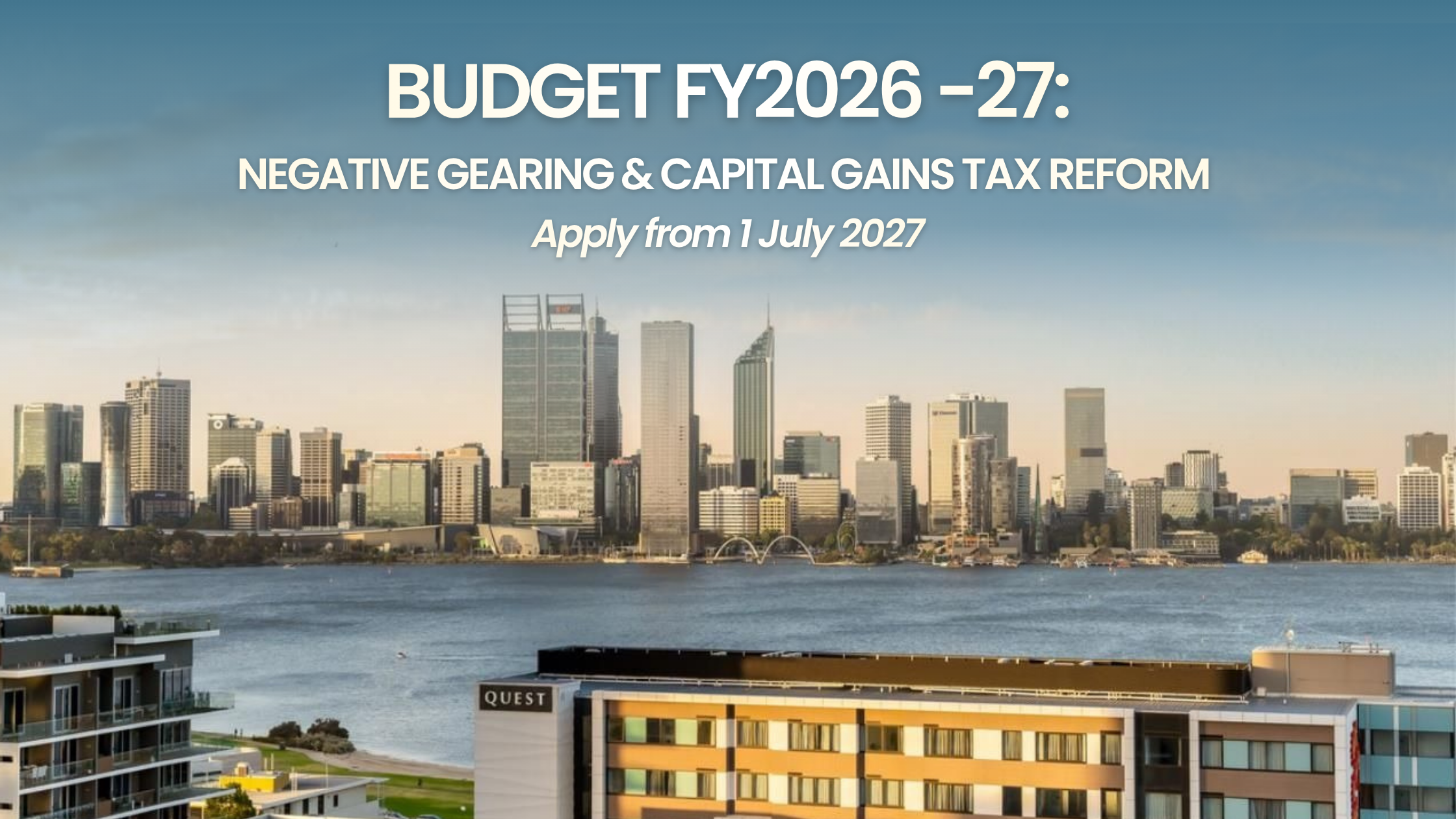
Australia’s biggest property tax reform in 40 years has officially been introduced. With major changes to negative gearing and CGT, many people are worried the property market may decline. Today, let’s take two minutes to understand what this reform really means and where the money is likely to flow in the future.
First, let’s understand what Negative Gearing and CGT are.
Negative Gearing:
This is when you buy an investment property and the rental income is not enough to cover expenses such as mortgage repayments, strata fees, and other holding costs. The loss can be offset against your salary income, helping you pay less personal income tax. Expenses such as mortgage interest, property management fees, maintenance costs, insurance, and depreciation may all be tax deductible.
Capital Gains Tax (CGT):
This is the tax you pay on the profit made when selling a property.
Before vs After the Reform
Under the current system:
Both new and established properties can access negative gearing benefits.
If the property is held for more than one year, investors receive a 50% CGT discount.
After the new rules take effect in 2027:
Only newly built properties will retain negative gearing benefits.
New buyers of established homes will no longer receive negative gearing advantages.
The fixed 50% CGT discount will be removed and replaced with an inflation-based calculation, meaning tax will only apply to the “real” capital growth above inflation.
More details & explanation about the reformation: Budget 2026–27 Tax Explainer
What Does This Mean for Perth Property Market?
Perth’s rental vacancy rate is currently as low as 0.5%, meaning the city is already experiencing a severe rental shortage.
With the new policy discouraging investors from buying established properties, more investors are expected to shift toward new developments. This could lead to fewer established homes being available for rent over time.
At the same time, Australia continues to experience strong migration and population growth, which means rising rental demand is likely to remain a long-term trend.
The CGT reform mainly impacts short-term speculators. For long-term property holders, the effect is expected to be limited.
It’s also important to note that large institutional and conservative investment funds have not yet fully entered the Perth market. Experienced investors tend to focus on long-term fundamentals such as city growth, population increases, and housing shortages, rather than short-term tax policy changes.
Another key point: these tax reforms will not begin until 2027. All current transactions and tax rules remain unchanged today, so there is no need for excessive panic or hesitation.
At its core, the Perth property market is driven by supply and demand — not purely by tax incentives. While there may be short-term market sentiment changes, the long-term outlook remains stable.
2. https://reiwa.com.au/news/housing-cash-splash--but-can-the-budget-deliver/
Thinking or Planning to Buy, Sell, or Rent Your Property Investment? Contact Us for the Expert Advice!
Website: www.az-property.com.au
Phone: 08 9355 2757
Enquiry send to [email protected]
#AZProperty #AZPropertyWA #property #realestate #housing #perthrealestate #perthproperty #perthrealestateagent #perthpropertymarket #propertymanagement #leasingWA #propertyWA #realestateWA #propertydevelopmentwa #propertyconsulting #propertyinvestment #firsthomebuyers #homebuyers #houseforsales #homeforrent #perthrental #houseforrent #leasing #wapropertymarket #propertymarketupdate #capitalgaintax #CGT #negativegearing #rentalmarket #perthrental